
Kyle Bagen | June 30, 2026 | Motorcycle accident \ Personal Injury
How Do I Prove the Other Driver Caused My Motorcycle Accident?
The motorcycle accident evidence that matters most is whatever proves the other driver, not you, caused the crash. That typically includes the official police report, traffic-camera or helmet-camera footage, physical damage patterns on both vehicles, eyewitness statements, and sometimes a formal accident reconstruction.
Motorcycle riders in Florida face a frustrating reality after a crash. Even when another driver clearly caused the collision, insurance adjusters often treat the rider as the one who needs to prove innocence. Without the right motorcycle accident evidence locked down early, a legitimate claim can fall apart.
That credibility gap is something riders along the Archer Road corridor in Gainesville know too well. The stretch between SW 75th Street and SW 91st Street near Oakmont and Haile Plantation sees heavy commuter traffic mixing with riders heading east into town or west toward the rural highways.
Left-turning vehicles, distracted drivers pulling out of shopping centers near Haile Village Center, and sudden lane changes on SR-24 create exactly the kind of scenarios where proving fault in a motorcycle accident becomes critical.
Key Takeaways about Proving Fault in a Motorcycle Accident
- Motorcycle accident claims often become credibility battles because
- Under Florida’s modified comparative negligence law, being assigned more than 50% fault bars recovery entirely.
- Traffic-camera footage, vehicle damage analysis, and helmet-camera video can counter false fault narratives.
- Eyewitness testimony from bystanders often carries more weight than statements from the drivers involved.
- Accident reconstruction can become the deciding factor in complex or disputed crashes.
- Florida’s two-year statute of limitations means evidence preservation must start immediately.
Why Do Insurance Companies Blame Motorcycle Riders?
Insurance adjusters start many motorcycle claims with a built-in assumption: the rider did something wrong. That bias is not accidental. It is a strategy.
Motorcycles are smaller, faster, and less visible than cars and trucks. Adjusters use those characteristics to argue the rider was speeding, weaving, or riding in a blind spot, even without evidence supporting those claims. They know that juries sometimes carry similar biases, and they use that leverage during settlement negotiations.
Under Florida Statute § 768.81, the state follows a modified comparative negligence system. If a rider is found more than 50% at fault for a crash, they recover nothing. That is a hard cutoff with no exceptions for motorcycle cases.
Before 2023, Florida used a pure comparative negligence model where riders could still recover partial damages even at high fault percentages. That safety net is gone.
This is exactly why motorcycle accident evidence matters so much. Every percentage point of fault the insurance company can shift onto a rider reduces or eliminates their compensation. Strong, well-documented evidence is the only reliable way to push back.
How Does the Police Crash Report Factor into Your Claim?
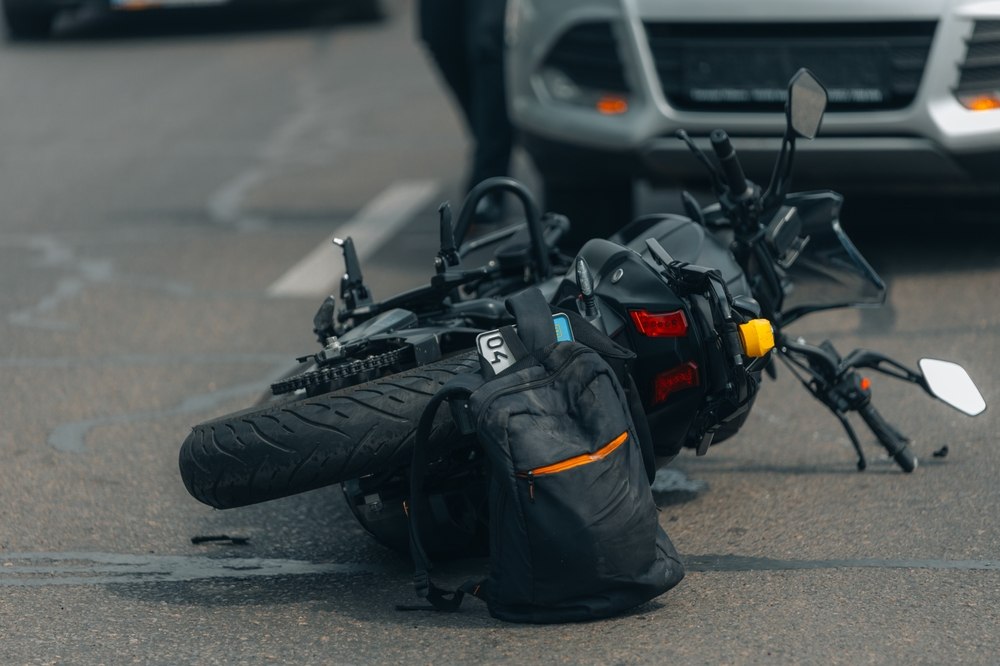
The official crash report is usually the first piece of motorcycle accident evidence an insurance adjuster reviews. Under Florida Statute § 316.066, law enforcement must complete a long-form traffic crash report for any collision involving injury, pain complaints, or a vehicle too damaged to drive from the scene.
That report documents the officer’s observations: vehicle positions, skid marks, road conditions, witness names, and sometimes a preliminary determination of which driver violated traffic law. If the officer notes that the other driver failed to yield or ran a red light, that carries significant weight during insurance negotiations.
However, the crash report is not the final word. Officers arrive after the collision, and their conclusions reflect what they could piece together from the evidence available. If the report contains errors or assigns shared fault without strong support, other evidence can challenge those findings. Riders should request a copy as soon as it becomes available.
What Role Does Traffic-Camera and Surveillance Footage Play?
Video footage is one of the most powerful forms of motorcycle accident evidence because it shows what actually happened, not what someone remembers or claims after the fact.
Along high-traffic corridors like Archer Road, traffic cameras at signalized intersections can capture the moments before and during a collision.
Nearby businesses, gas stations, and residential security cameras sometimes record crashes from different angles. That footage can show whether the other driver ran a red light, failed to check a blind spot, or turned left directly into a rider’s path.
The challenge is that this footage does not preserve itself. Many surveillance systems overwrite recordings within 48 to 72 hours. A Gainesville motorcycle accident lawyer can send preservation letters to businesses and government agencies quickly enough to save footage before it disappears.
For riders along SW 91st Street or near intersections feeding into Haile Plantation, the surrounding commercial properties often have exterior cameras that capture road activity. Securing that footage early can make or break a disputed claim.
Helmet-Camera and Dashcam Video as Proof
Rider-mounted cameras have become one of the most effective tools for proving fault in a motorcycle accident. A helmet camera or handlebar-mounted dashcam records the rider’s perspective in real time, capturing lane positions, traffic signals, the behavior of surrounding drivers, and the moment of impact.
This type of footage directly counters the most common insurance arguments. If the adjuster claims the rider was speeding, but the video shows the rider moving with traffic at a normal pace, that argument falls apart.
If the other driver claims they never saw the motorcycle, but the footage shows the rider’s headlight was on and visible for several seconds before the crash, the driver’s credibility takes a serious hit.
Helmet-camera evidence is especially valuable in left-turn crashes, one of the most common motorcycle collisions in Florida. A driver turning left across oncoming traffic at a busy Archer Road intersection may claim the motorcycle appeared out of nowhere. Video showing the rider approaching in a straight line with clear visibility tells a very different story.
Florida does not prohibit riders from using mounted cameras, and the footage is generally admissible in Gainesville personal injury claims.
Vehicle Damage Tells a Story
The physical damage to both the motorcycle and the other vehicle tells a story about how the crash happened. Damage analysis is a form of motorcycle accident evidence that can confirm or contradict the other driver’s account.
The location, depth, and direction of impact damage reveal details like the angle of collision, the approximate speed at impact, and which vehicle was moving into the other’s space. If the driver claims the motorcycle rear-ended them, but the damage on the car is along the driver’s side front quarter panel, the physical evidence does not match that story.
Paint transfer between vehicles, gouge marks on the road surface, and the resting positions of both vehicles after the crash all add context. In motorcycle cases, the type and pattern of road rash on the rider’s protective gear can even indicate the direction the rider was thrown, which helps reconstruct the mechanics of the collision.
Insurance companies hire their own damage analysts, and their conclusions do not always favor the rider. Having an independent assessment creates a counterpoint that keeps the motorcycle crash investigation honest.
Why Is Eyewitness Testimony So Important in Motorcycle Cases?
When a crash comes down to the rider’s word against the driver’s word, motorcycle accident witness evidence from a neutral third party can tip the balance. Bystanders, other drivers, and pedestrians who saw the collision have no stake in the outcome, and that independence gives their testimony added credibility.

Witnesses can confirm critical details: which vehicle had the green light, whether the driver was looking at a phone, and whether the driver signaled before turning or changing lanes. Along congested stretches like Archer Road near Haile Village Center, other drivers stopped at intersections often have a clear view of crashes.
The problem is that witnesses leave the scene. Without contact information collected at the time of the crash, tracking them down later becomes difficult or impossible. Riders who are physically able to do so after a collision should ask bystanders for their names and phone numbers. The police crash report sometimes includes witness names, but not always.
The Role of Accident Reconstruction in Disputed Claims
Some motorcycle crashes involve disputed facts that physical evidence and witness testimony alone cannot resolve. In those cases, a formal accident reconstruction can become the most important piece of motorcycle accident evidence in the entire claim.
Accident reconstruction professionals use physics, vehicle dynamics, road geometry, and physical evidence to recreate how a collision occurred. They analyze vehicle speeds before impact, braking distances, reaction times, sight lines, and road conditions to build a scientific model of the crash.
This kind of analysis is especially useful when an insurance dispute over a motorcycle accident involves conflicting accounts. If the driver claims they were traveling at 25 miles per hour, but the damage pattern and debris field indicate a much higher speed, a reconstruction professional can calculate the actual impact velocity.
Reconstruction is also valuable in intersection crashes common along Archer Road and SR-24, where multiple lanes, turn signals, and varying sight lines create complex scenarios. A reconstruction can determine whether a left-turning driver had enough time and visibility to see an approaching motorcycle.
These analyses carry significant weight in both settlement negotiations and at trial.
What About Medical Records and Injury Documentation?
Medical records do more than document injuries. They serve as motorcycle accident evidence connecting the crash to specific physical harm.
Prompt medical treatment creates a timeline showing that injuries appeared immediately after or shortly following the collision. Gaps in treatment give adjusters room to argue that the injuries were pre-existing or unrelated to the crash.
For motorcycle riders, who often suffer road rash, fractures, traumatic brain injuries, and soft tissue damage, consistent medical documentation ties those conditions directly to the collision.
Emergency room records, imaging studies, surgical notes, and follow-up treatment plans all become part of the evidence file. Physicians’ notes about the mechanism of injury, such as “consistent with high-speed lateral impact,” directly support the rider’s account of what happened.
Riders should also keep personal records of their recovery, including pain levels, limitations on daily activities, and missed work.
How Does Florida’s Two-Year Deadline Affect Evidence Gathering?
Under Florida Statute § 95.11, motorcycle accident injury claims must generally be filed within two years of the crash date. Missing that deadline typically means losing the right to seek compensation altogether.
Two years may sound like enough time, but evidence degrades fast. Surveillance footage gets overwritten in days. Witness memories fade within weeks. Vehicle damage gets repaired or the motorcycle gets scrapped. The sooner a motorcycle crash investigation begins, the more evidence is available to work with.
Haile Plantation residents already face complex insurance disputes after crashes in the southwest Gainesville area. Starting the evidence-gathering process early protects riders from being caught without the documentation they need.
It is also worth understanding that the driver who hit you may carry liability under standard auto insurance, but coverage limits in Florida are often low. Thorough evidence collection supports not only the fault determination but also the full valuation of the claim.
FAQs about Motorcycle Accident Evidence
Here are answers to some common questions riders have about gathering and using evidence after a motorcycle crash.
There is no formal deadline for collecting evidence, but the practical window is very short. Surveillance footage may be erased within days, and physical evidence at the crash site can disappear quickly. Starting within the first 24 to 48 hours gives you the strongest foundation for your claim.
Yes. Officers base their reports on observations and statements gathered at the scene, and they sometimes draw incorrect conclusions. Video footage, vehicle damage analysis, or witness testimony can challenge an inaccurate fault determination.
Helmet-camera and dashcam footage is generally admissible in Florida personal injury cases. The footage must be authentic and unedited to carry the most weight. Save the original recording immediately after a crash and avoid making any changes to the file.
Cases without independent witnesses rely more heavily on physical evidence, video footage, the crash report, and sometimes accident reconstruction. Damage patterns, road markings, and debris fields can all help establish what happened.
No. Insurance companies conduct their own investigations and are not bound by the officer’s conclusions. That is why building an independent evidence file with photos, video, medical records, and witness statements matters so much.
Under Florida’s modified comparative negligence law, your compensation is reduced by your percentage of fault. If the insurer argues you were more than 50% responsible, you could be barred from recovering any damages. Strong motorcycle accident evidence is the most effective way to counter those arguments.
Talk to a Motorcycle Accident Attorney Who Knows How to Build These Cases

Proving fault after a motorcycle crash takes more than filing a police report and hoping the insurance company does the right thing. It takes evidence, and it takes someone who knows how to find it, preserve it, and use it.
At Bagen Law Accident Injury Lawyers, we have spent more than 40 years fighting for injured riders across Gainesville, Ocala, and North Central Florida.
We understand the tactics insurance companies use to shift blame onto motorcycle riders, and we know how to push back. Our legal team has recovered hundreds of millions of dollars for our clients, and we do not collect a fee unless we win your case.
If you were hurt in a motorcycle accident and the insurance company is not telling the full story, call us at (800) 800-2575. The consultation is free, and there is never any risk to you.