

Reports | March 9, 2026 | Truck Accidents
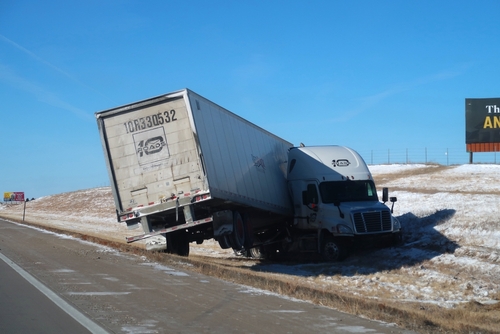
When an 80,000-pound semi-truck folds in on itself at highway speed, the trailer sweeps across multiple lanes like a steel pendulum. Vehicles caught in its path have no escape. Jackknife truck accidents differ from other commercial truck crashes because the physics that cause them often require analysis by accident reconstruction specialists to determine where the fault lies.
Multiple parties may share responsibility, from the driver to the trucking company to a third-party maintenance contractor or cargo loader. For victims injured in a Gainesville semi-truck jackknife accident, the question of who is responsible rarely has a simple answer. A Gainesville truck accident lawyer can investigate the crash, preserve critical evidence, and identify every party whose negligence contributed to your injuries.
Why Are Jackknife Accident Claims More Complex?
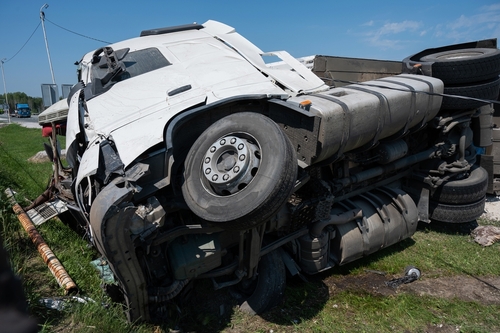
Jackknife accidents create complicated liability issues because these crashes involve physics that ordinary collisions do not. Determining fault often requires accident reconstruction experts to analyze braking patterns, speed data, road conditions, and cargo loading.
The driver, trucking company, cargo loaders, maintenance providers, and even government entities may all share liability. Under Florida’s modified comparative negligence system, your compensation in Gainesville truck accident cases depends directly on the percentage of fault assigned to each party.
Key Takeaways: What Individuals Injured in Jackknife Crashes Need to Know
- A jackknife occurs when the trailer swings out of alignment with the cab, forming a V-shape that blocks multiple lanes and strikes vehicles in its path.
- Electronic data from the truck’s “black box” and ELD logs can reveal speeding, hard braking, and hours-of-service violations that may have played a role in the crash.
- Multiple parties may be liable, including the truck driver, trucking company, cargo loading company, and maintenance contractors.
- Florida law bars recovery if you are found more than 50% at fault, so countering attempts to shift blame onto you should be a vital part of your legal strategy.
- Preserving evidence quickly matters because trucking companies may overwrite or erase electronic data within weeks.
What Exactly Is a Jackknife Truck Accident?
The term “jackknife” describes how a folding pocket knife closes. When applied to a tractor-trailer, it means the cab and trailer fold at the fifth wheel coupling point, creating a sharp angle that resembles a partially closed knife.
How the physics apply
A loaded semi-truck consists of two connected but independently moving units. The tractor (cab) provides power and steering. The trailer follows behind, connected at a pivot point called the fifth wheel. When both units travel in a straight line at a consistent speed, momentum keeps them aligned.
Problems begin when the cab slows faster than the trailer. If the tractor’s drive wheels lock while the trailer wheels keep rolling, the trailer’s momentum pushes it forward and to the side. The fifth wheel becomes a hinge, and the trailer swings outward. Once this rotation begins, the driver has almost no ability to correct it.
Tractor jackknife vs. trailer jackknife
A tractor jackknife happens when the cab’s drive wheels lose traction and skid, causing it to swing out while the trailer continues forward. A trailer jackknife occurs when the trailer wheels lock and the trailer swings independently. Both types can send an 80,000-pound vehicle careening across multiple lanes of traffic on I-75, Archer Road, or US-441.
Common Causes of Jackknife Crashes in North Central Florida
Jackknifing rarely happens without a triggering event. Most crashes trace back to one or more of these factors.
Improper braking technique
Sudden, hard braking is the leading cause of jackknife accidents. When a driver brakes too aggressively, especially on a downgrade or curve, the wheels can lock. Modern trucks are required to have anti-lock braking systems (ABS), but ABS cannot prevent every skid, particularly if the system is poorly maintained or the driver overrides it.
Many Gainesville-area roads present specific challenges. The curves and elevation changes on I-75 near Paynes Prairie, the busy intersections along Newberry Road, and the commercial traffic on US-441 all create braking scenarios that can trigger jackknifing.
Excessive speed
Driving too fast for conditions reduces stopping distance and increases the force of any skid. This is especially dangerous on curves or when the weather reduces visibility.
The National Highway Traffic Safety Administration recommends that trucks not exceed 55 mph on curved roads or in poor weather. A driver exceeding safe speeds near the SR-24 interchange or through downtown Gainesville traffic may have little margin for error.
Improperly loaded or secured cargo
Cargo distribution directly affects trailer stability. When weight is concentrated at the rear or loaded unevenly, the trailer’s center of gravity shifts in truck accidents in Gainesville. During braking or turning, this imbalance can cause the trailer to swing.
Federal cargo securement standards under 49 CFR Part 393 require proper load distribution. When cargo loaders violate these standards, they may share liability for crashes that result.
Mechanical failures
Worn brakes, defective tires, and malfunctioning ABS systems can all contribute to jackknifing. The Federal Motor Carrier Safety Administration (FMCSA) requires regular inspections and maintenance, but some trucking companies cut corners.
A tire blowout at highway speed near the Williston Road interchange or brake failure on the Archer Road corridor can leave even an experienced driver unable to prevent a jackknife.
Driver fatigue and distraction
Fatigued drivers react more slowly to changing conditions. A driver who misses early signs of a skid or brakes too late may trigger a jackknife that an alert driver could have avoided.
Federal hours-of-service regulations limit driving time, but violations remain common. Electronic Logging Devices (ELDs) now record this data, providing evidence when drivers or trucking companies fail to comply with rest requirements.
How Accident Reconstruction Determines Fault
Because jackknife accidents involve complex physics, determining what happened often requires accident reconstruction. These specialists analyze multiple data sources to establish causation.
Physical evidence at the scene
Skid marks indicate where wheels locked and how vehicles traveled after impact. Gouge marks show where metal scraped the pavement. Final resting positions reveal the collision sequence. Debris patterns indicate speed and force of impact.
This evidence disappears quickly. Rain washes away marks. Road crews clean debris. Vehicles get towed and repaired. Preserving scene evidence requires immediate action.
Electronic data from the truck
Modern commercial trucks contain multiple data recording systems. The Electronic Control Module (ECM) records engine speed, vehicle speed, throttle position, and brake application in the seconds before a crash. This “black box” data provides objective evidence of driver behavior.
Electronic Logging Devices track hours of service, driving time, and rest periods. If a driver was operating beyond legal limits, this data proves it.
FMCSA regulations require trucking companies to retain ELD data for six months. However, ECM data may be overwritten within weeks. Sending a preservation letter immediately after a crash is essential.
Maintenance and inspection records
Federal regulations require detailed records of inspections, maintenance, and repairs. If a jackknife resulted from brake failure, these records show whether the trucking company kept the brakes properly maintained or ignored warning signs.
Driver qualification files, training records, and dispatch communications may also reveal whether the trucking company negligently hired, trained, or supervised the driver.
Who May Be Liable for a Jackknife Accident?
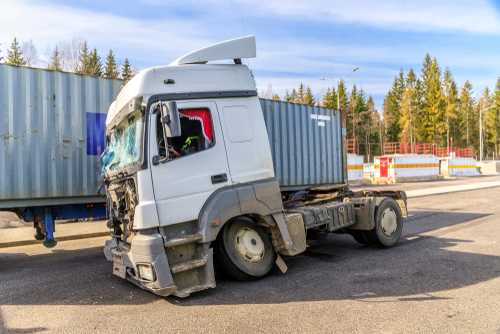
Unlike typical car crashes with one or two at-fault parties, jackknife accidents often involve multiple defendants.
The truck driver
A driver who was speeding, braking improperly, driving while fatigued, or distracted may be directly liable. Their actions behind the wheel triggered the physical sequence that caused the crash.
The trucking company
Trucking companies can be liable under several theories. If the driver was an employee acting within the scope of employment, the company is vicariously liable. If the company negligently hired an unqualified driver, pushed drivers to violate hours-of-service rules, or failed to maintain equipment, the company may be directly liable for a truck accident in Florida.
Cargo loading companies
Third-party companies that load trailers may be liable if improper loading caused or contributed to the jackknife. An unbalanced load that shifted during braking can turn a manageable stop into a catastrophic skid.
Maintenance contractors
Companies that service trucks have duties to perform repairs properly. If defective brake work or a missed safety issue contributed to the crash, the maintenance provider may share fault.
Government entities
Poor road design, inadequate signage, or failure to treat icy road surfaces can contribute to crashes. If a government entity responsible for road maintenance contributed to conditions that caused the jackknife, they may share liability. Claims against government entities require following specific notice procedures.
Florida’s Comparative Negligence Rules and Why They Matter
Florida Statute 768.81 establishes the state’s modified comparative negligence system. Under this rule, your compensation is reduced by your percentage of fault. If a jury finds you 30% responsible, your total award would be reduced by 30%.
The 50% bar
Florida law bars recovery entirely if you are found more than 50% at fault. This threshold creates high stakes in jackknife cases, where trucking companies and insurers often try to shift blame onto the injured driver.
Defense arguments may claim you were following too closely, speeding, or failed to take evasive action. Strong evidence of the truck driver’s negligence can counter these allegations and protect your right to compensation.
Why fault determination requires investigation
Without a thorough investigation, the trucking company controls the narrative. Their insurance adjusters and rapid-response teams arrive at crash scenes within hours. They photograph, measure, interview witnesses, and collect evidence to protect the company.
Victims need their own investigation. Reconstructing the accident sequence, obtaining black box data, reviewing maintenance records, and identifying all potentially liable parties requires resources and legal authority.
What Evidence Matters Most in Trailer Swing Accident Claims?
Building a strong jackknife case requires specific evidence tied to the crash mechanics.
Time-sensitive evidence
Black box and ECM data can be overwritten. Surveillance video from nearby businesses typically gets deleted within 30 to 90 days. Skid marks fade. Vehicles get repaired or scrapped. Acting quickly preserves your strongest evidence.
Documents from the trucking company
Driver logs, qualification files, training records, maintenance logs, and dispatch communications all reveal potential negligence. Discovery requests compel production of these documents, but trucking companies may resist or claim records were lost.
Expert analysis
Accident reconstruction specialists interpret physical evidence and electronic data to establish causation in a truck accident on a rural Gainesville road. Mechanical engineers evaluate whether equipment failures contributed. Medical specialists document your injuries and connect them to the crash forces.
What is the Statute of Limitations for Truck Accident Claims in Florida?
Florida law gives you two years from the date of a truck accident to file a personal injury lawsuit. This deadline applies to crashes occurring on or after March 24, 2023.
Missing this deadline typically bars your claim entirely, regardless of how strong your case might be. Because thorough investigation takes time and evidence degrades quickly, starting the legal process promptly protects your rights.
Frequently Asked Questions About Jackknife Truck Collisions
The truck jackknifed across multiple lanes and hit me. Who is responsible?
Multiple parties may share responsibility. The truck driver may be liable for improper braking or speeding. The trucking company may be liable for negligent hiring, training, or maintenance. Cargo loaders may be liable if improper loading caused the trailer to swing. Investigation determines which parties contributed to the crash and in what proportions.
Are DOT regulations federal or state?
Both. The Federal Motor Carrier Safety Administration sets federal regulations for interstate trucking under 49 CFR. Florida also has state regulations for intrastate carriers. Federal FMCSA rules apply to trucks crossing state lines. Florida-only carriers follow state rules, though many state requirements mirror federal standards.
How long does the trucking company keep the black box data?
FMCSA regulations require carriers to retain ELD records for six months. However, ECM event data may be overwritten much sooner, sometimes within weeks. Having an attorney send a formal preservation letter immediately after a crash is critical to prevent data loss.
What if the trucking company says I caused the accident?
Insurance companies routinely try to shift blame to reduce or eliminate payouts. Evidence from the crash scene, electronic data, witness statements, and expert analysis can counter false accusations. Florida’s modified comparative negligence system allows recovery as long as you are not more than 50% at fault.
What compensation can I recover after a jackknife truck accident?
You may recover medical expenses, lost wages, future medical care, lost earning capacity, pain and suffering, and other damages. The specific amount depends on your injuries, their long-term effects, and how liability is apportioned among responsible parties.
Take Control of Your Gainesville Truck Accident Case Today

A jackknife truck accident can leave you facing serious injuries, mounting medical bills, and uncertainty about your future. The trucking company has already started building its defense. You need someone fighting for your interests with the same urgency.
Bagen Law Accident Injury Lawyers has fought for Florida’s injured for over 40 years, recovering hundreds of millions of dollars for clients. With a 99% success rate and a no-fee guarantee, you pay nothing unless your case succeeds. Call or contact us online for a free consultation.