

Reports | May 6, 2026 | Personal Injury
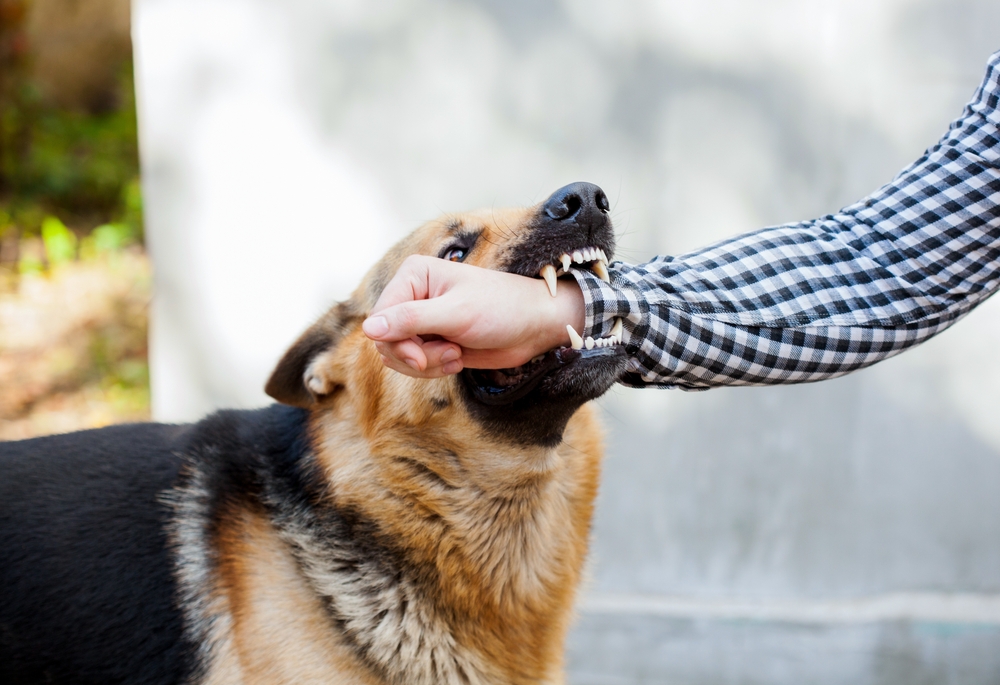
In many Florida dog bite cases, the owner is automatically responsible for bite injuries, even if the dog has never bitten anyone before. If you have legal concerns about recovering compensation for injuries, contact a Gainesville dog bite lawyer who can clarify your legal rights and options.
Florida’s Dog Bite Law Explained: Why Gainesville Victims Don’t Have to Prove the Dog Was Dangerous Before
Florida dog bite law uses a strict liability standard in Gainesville, which means victims generally do not have to prove the dog was dangerous or had bitten anyone before to bring a claim.
This is one of the most important protections Gainesville dog bite victims have—and one many people do not realize until after an attack.
Understanding how Florida’s strict liability dog bite statute works—and how those defenses operate—is essential if you were bitten in Gainesville or elsewhere in Alachua County.
To learn how the following legal insights may affect your claim, contact a Gainesville dog bite injury lawyer for a free case review.
Key Takeaways About Florida Dog Bite Strict Liability in Gainesville
- Florida’s dog bite law is generally strict liability, even for a dog’s first bite.
- Gainesville victims usually do not have to prove the dog was known to be dangerous.
- Owners often raise defenses like provocation, trespassing, or “Bad Dog” warnings.
- Photos, medical records, witness statements, and scene details are crucial evidence.
- A Gainesville dog bite attorney can use strict liability to pursue full compensation.
How Does Florida’s Dog Bite Strict Liability Rule Work in Gainesville, Florida?
Florida’s dog bite strict liability rule, found in section 767.04 of the Florida Statutes, generally makes a dog owner responsible when their dog bites someone who is lawfully on public property or on the owner’s property with permission.
In many Gainesville cases, the victim does not have to prove the owner was negligent or that the dog had a history of aggression.
For local victims, this shifts the focus away from arguing about the dog’s past and toward the core facts: there was a bite, the dog belonged to or was under the control of a particular owner, and the victim had a legal right to be where the bite occurred.
Once those elements are established, strict liability starts from the presumption of owner responsibility, and any limitation on that responsibility usually comes from specific defenses.
Why Prior Aggression Does Not Control Your Dog Bite Case in Florida
Florida does not follow the “one‑bite rule,” which in other states can give owners a partial pass for a dog’s first attack.
Under Florida’s strict liability statute, a lack of prior bites does not shield the owner, and a “friendly” reputation or sudden, “out‑of‑the‑blue” attack does not prevent a Gainesville victim from bringing a claim.
This means owners cannot avoid liability simply by saying “the dog never did this before.” For Gainesville victims, you should not assume you have no case just because neighbors describe the dog as gentle.
The law is specifically structured so that people harmed by a first bite are still protected, and the owner remains accountable regardless of whether the dog has a documented history of aggression.
When a Dog Owner Is (and Is Not) Automatically Liable in Florida
Florida’s strict liability dog bite law creates a strong starting point for owner responsibility, but it is not absolute. A dog owner is often liable when their dog bites:
- someone in a public place, such as a sidewalk, park, or shared common area
- someone lawfully on private property, such as a guest, neighbor, customer, or delivery person
- a victim who did not provoke the dog and was not trespassing
Owner liability can become more complicated when:
- the victim was trespassing or in an area where they had no legal right to be
- the owner had a clear, visible warning sign that may affect liability for certain adults
- the victim’s actions may be treated as provocation or comparative negligence
- another person or entity, like a caretaker, property manager, or landlord, may share responsibility
The bottom line is that Florida dog bite strict liability in Gainesville starts with the owner on the hook, and then specific defenses and facts determine whether that responsibility is reduced, shared, or, in limited circumstances, avoided.
| Situation | Is the owner usually liable? | Why liability may apply or be limited |
| Bite in a public place (sidewalk, park, shared common area) | Often yes | Victim is lawfully in a public place and protected by Florida’s strict liability dog bite law. |
| Bite on private property where victim is invited or has permission (guest, neighbor, customer, delivery person) | Often yes | Victim is lawfully on the property, so strict liability generally applies to the owner. |
| Bite where the victim is trespassing or in an off‑limits area | Often disputed | Owner may argue trespass as a defense that limits or bars recovery. |
| Bite after the victim clearly provokes the dog | Often reduced or disputed | Provocation can lead to reduced compensation based on the victim’s share of fault. |
| Bite where a clear, visible warning sign was posted | Depends on victim and facts | Certain warning signs can affect claims by adult victims, depending on the circumstances. |
| Bite involving a dog under the control of a caretaker or property manager | Sometimes shared | Liability may be shared between the legal owner and others who had control over the dog. |
Common Defenses Dog Owners and Insurers Raise in Gainesville
Even under strict liability, dog owners and insurance companies frequently try to avoid or limit paying claims by arguing defenses such as:
- Provocation: claiming the victim teased, hit, or otherwise provoked the dog
- Trespassing: arguing the victim was not lawfully on the property when the bite occurred
- Assumption of risk: suggesting the victim knowingly approached or interacted with a clearly dangerous dog
- Warning signs: pointing to “Bad Dog” or similar warnings posted on the property in an attempt to reduce liability for adult victims
- Comparative fault: arguing the victim’s own carelessness partly caused the incident, which can reduce compensation under Florida’s comparative negligence rules
These defenses can be intimidating, especially when presented as if they completely destroy the case. In reality, they often raise questions of degree: how much did the victim’s conduct matter, and what does the evidence actually show?
What Evidence Can Strengthen a Florida Dog Bite Injury Claim?
Florida dog bite survivors can strengthen their claims by preserving information that helps prove what happened and counters common defenses, such as:
- Medical records and photographs of the bite wounds and healing process
- Scene photos, including the property, gates, warning signs (or lack of them), and where the bite happened
- Witness statements from neighbors, passersby, or anyone who saw the dog’s behavior before or during the incident
- Animal control or police reports, including any prior complaints involving the same dog
- Documentation of costs, such as medical bills, prescription receipts, lost wage records, and travel to appointments
- Proof of lawful presence, like delivery records, invitations, or lease terms showing the victim’s right to be on the property
The goal is to create a clear picture: the dog bit, the victim was allowed to be there, and nothing the victim did justifies shifting responsibility away from the owner.
How Much Is a Florida Dog Bite Injury Claim Worth?
The value of a Florida dog bite injury claim depends on how seriously the bite affects your health, your ability to work, and your daily life—not on any fixed “average” number.
In Gainesville, cases with more severe, permanent injuries or long‑term psychological impact are generally treated as higher‑value claims than those involving minor, short‑term harm.
Even with strict liability, Florida dog bite cases are still driven by damages—the actual harm the bite caused. A Gainesville dog bite victim may be able to pursue compensation for:
- Medical expenses: emergency treatment, sutures, follow‑up visits, infection treatment, and reconstructive or plastic surgery
- Future medical care: scar revision, therapy for nerve damage, and monitoring for complications
- Lost wages: time missed from work due to treatment and recovery
- Reduced earning capacity: if lasting injuries affect the victim’s ability to perform their job
- Scarring and disfigurement: especially important when bites involve the face or visible areas
- Pain and suffering: physical pain and emotional distress
- Psychological harm: anxiety around dogs, post‑traumatic stress, or sleep disturbances after a severe attack
Florida’s dog bite strict liability in Gainesville helps shift the focus from debating the dog’s history to documenting the real, individualized cost of what the bite has done to the victim’s life.
How Comparative Negligence Can Reduce Dog Bite Compensation in Florida
Florida’s comparative negligence rules can affect dog bite compensation when the defense argues that the victim’s own conduct contributed to the incident. Even under strict liability, a court or insurer may reduce damages in proportion to the victim’s share of fault.
Examples that may trigger comparative negligence arguments include:
- approaching or trying to pet a dog after being warned not to
- entering a clearly fenced area without permission
- ignoring verbal or posted warnings about the dog
This does not mean any alleged fault automatically wipes out the claim. It usually becomes a question of percentages. Evidence about what warnings were actually given, where the victim was standing, and how the dog behaved can all influence how comparative negligence is evaluated.
Special Considerations for Children Hurt in Gainesville Dog Attacks
Dog bite cases involving children raise special legal and practical issues. Children are more vulnerable physically, and the law often treats their conduct differently from that of adults.
Key points for child victims include:
- Young children may not be held to the same standard of care as adults when evaluating their actions around a dog.
- “Warning sign” defenses and assumption‑of‑risk theories can operate differently when the victim is a child who may not fully understand the danger.
- Damages may involve long‑term scarring, growth issues, and psychological trauma that require years of treatment.
For families in Gainesville, this means it is especially important to have a careful assessment of both the child’s injuries and the legal defenses being raised, rather than accepting a quick, low settlement.
Landlords, Property Owners, and Other Potentially Responsible Parties
Although Florida’s strict liability dog bite statute focuses on dog owners, some cases raise questions about whether others may also share responsibility. Depending on the facts, additional parties might include:
- Landlords or property managers who knew of a dangerous dog and failed to act in certain circumstances
- Homeowners’ associations or property owners who control common areas where the dog was allowed to roam
- Caretakers or dog sitters who were responsible for supervising the dog at the time of the bite
Whether these parties can be held liable will depend on their knowledge and control over the property, as well as on specific Florida legal standards outside the strict liability statute. The point is that the owner may not be the only person to evaluate in a serious Gainesville dog bite case.
Gainesville Dog Bite Strict Liability FAQ
Is a dog owner automatically responsible if their dog bites me in Florida?
In many cases, yes. Florida’s strict liability dog bite law generally makes a dog owner responsible when their dog bites someone who is lawfully on public or private property, even if the dog has never bitten anyone before.
Do I have to prove the dog was dangerous or had bitten before?
No. In a Florida strict liability dog attack case, you usually do not have to prove the dog was dangerous or that the owner knew of prior aggression. Showing that the dog bit you, that the owner is responsible for the dog, and that you were lawfully present is often enough to trigger the strict liability analysis.
What if the owner says I provoked the dog?
Provocation is a common legal defense, but it is not automatically fatal to your claim. The real question is whether your conduct legally counts as provocation or comparative negligence and, if so, how much it should reduce your compensation.
Can I still bring a claim if there was a “Bad Dog” sign?
A “Bad Dog” or similar warning sign may affect an adult victim’s claim under Florida law, but it does not automatically end every case. The sign’s visibility, placement, and applicability to the situation, as well as the victim’s age and conduct, can all influence how much the sign matters in a Gainesville dog bite claim.
What should I do after a dog bite in Gainesville?
After a dog bites you in Gainesville, get prompt medical care, report the incident to local authorities if appropriate, document the injuries with photos, and gather any witness contact information. Speaking with a Gainesville dog bite attorney can help you understand how Florida’s strict liability rules apply to your situation.
When You Don’t Have to Prove the Dog Was Dangerous, But Still Need Legal Help, Contact a Gainesville Dog Bite Injury Attorney
Florida’s strict liability dog bite law gives Gainesville victims an important advantage: you generally do not have to prove the dog was dangerous before the attack. But that does not stop owners and insurers from trying to shift blame, minimize injuries, or use technical defenses to reduce what they pay.
If you or a family member were bitten by a dog in Gainesville or anywhere in Alachua County, a dog bite attorney can help explain how strict liability applies, evaluate any defenses being raised, and build the evidence needed to support a fair settlement.
To talk with Gainesville dog bite lawyers about your options, you can call Bagen Law at (800) BAGEN LAW or reach out through our online contact form to discuss your situation and possible next steps.