

Kyle Bagen | June 22, 2026 | Car Accidents \ Pedestrian Accidents \ Personal Injury

Quick Answer: Who Is Liable for a Pedestrian Accident at Ocala’s Downtown Square?
When a driver strikes a pedestrian in or near Ocala’s Downtown Square, the driver may be liable if they failed to yield at a marked crosswalk, ran a signal, or drove without reasonable care through the Historic District’s dense foot traffic corridors. A downtown Ocala pedestrian accident claim follows Florida’s negligence framework, which requires showing the driver breached a duty of care and that breach directly caused the pedestrian’s injuries.
Pedestrian accidents near Ocala’s Downtown Square and Historic District are among the most serious injury cases in Marion County.
The one-way streets along SE Broadway and Magnolia Avenue push traffic in ways that catch people walking off-guard, brick crosswalks create uneven footing, and the busy restaurant and arts district around the Brick City Center for the Arts draws people into the road at all hours.
Contacting an Ocala pedestrian accident lawyer is one of the most important steps that follows the ER visit after an accident.
Key Takeaways About Ocala Downtown Square Pedestrian Accidents
- Florida law requires drivers to yield to pedestrians in marked crosswalks, and failing to do so may constitute negligence per se, meaning the violation itself establishes the driver’s breach of duty.
- Pedestrians struck by vehicles in downtown Ocala may access compensation through the at-fault driver’s liability policy, their own uninsured motorist coverage, or both.
- Florida’s modified comparative negligence rule may reduce a pedestrian’s recovery if they share partial fault, but a pedestrian who is 50 percent or less at fault may still recover compensation.
- Surveillance footage from businesses along SE Broadway and Magnolia Avenue operates on short retention cycles, and securing it quickly after a crash is one of the most time-sensitive steps in building a claim.
- Pedestrian injuries from vehicle impacts are frequently catastrophic, involving traumatic brain injury, spinal cord damage, and fractures that produce long-term or permanent consequences.
Does Florida’s No-Fault Insurance Law Cover Pedestrians Hit by Cars?
Florida’s personal injury protection (PIP) law covers pedestrians struck by vehicles, which surprises many people who associate no-fault insurance exclusively with drivers. A pedestrian hit by a car in downtown Ocala may access PIP benefits through their own auto insurance policy if they carry one, regardless of who caused the crash.
When PIP Runs Out
When a pedestrian’s injuries exceed PIP limits, or when the pedestrian does not carry their own auto insurance, the at-fault driver’s liability coverage becomes the primary recovery path.
Florida requires drivers to carry property damage liability coverage, but bodily injury liability coverage is not mandatory under state law, which means some drivers who strike pedestrians carry no coverage for the victim’s physical injuries.
How Comparative Fault Affects a Downtown Ocala Pedestrian Claim
Florida’s modified comparative negligence rule applies to pedestrian claims just as it applies to any other personal injury case. A pedestrian who crossed outside a marked crosswalk, entered the roadway against a signal, or acted in a way that contributed to the crash may see their compensation reduced by their assigned percentage of fault.
However, a pedestrian who is 50 percent or less responsible for the crash may still recover from the at-fault driver. Drivers from Silver Springs Shores who drive into downtown Ocala during events or evening hours frequently argue that pedestrian inattention contributed to a crash, making legal representation a practical asset for any victim navigating that argument.
Where Does Downtown Ocala Put Pedestrians at Risk?
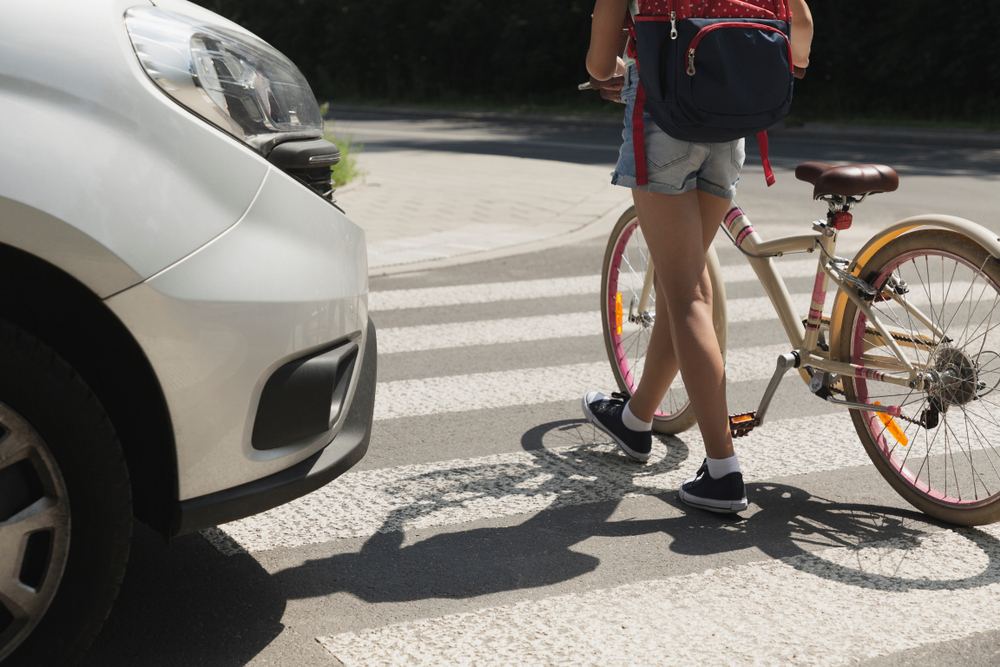
The highest-risk pedestrian zones in downtown Ocala concentrate around the intersections, crosswalks, and parking corridors where vehicle and foot traffic converge most heavily.
Several specific locations in the downtown corridor present elevated and recurring pedestrian risk:
- SE Broadway Street intersections: The one-way traffic flow along SE Broadway creates driver behavior patterns where vehicles accelerate between signals and approach crosswalks at speeds inconsistent with the pedestrian density in that corridor.
- Magnolia Avenue crosswalks: Pedestrians crossing Magnolia Avenue near the Downtown Square navigate wide lanes and angled parking configurations that reduce driver sightlines and create conflict points between backing vehicles and foot traffic.
- Tuscawilla Park perimeter paths: Pedestrians entering and exiting Tuscawilla Park cross active roadways where driver awareness of foot traffic varies significantly depending on the time of day and event activity in the park.
- Downtown Square event perimeter: During weekend markets, concerts, and community events, crowd overflow pushes pedestrian traffic into the roadway at points beyond marked crosswalks, increasing the risk of a pedestrian being struck by a driver unfamiliar with the area.
- Brick crosswalk surfaces: The decorative brick paving throughout the Historic District creates surface irregularities that affect pedestrian footing in wet conditions and may contribute to a fall that places a pedestrian in a vehicle’s path.
Why Injuries in Ocala’s Historic District Can Be Catastrophic
Pedestrian injuries in the Downtown Square and Historic District area are often serious because people on foot have no protection from the force of a vehicle impact. Many victims suffer a second injury when they hit the pavement or another object.
Common injuries include traumatic brain injuries and spinal cord damage, which require immediate imaging at a facility like AdventHealth Ocala or Ocala Health, and both produce medical cost trajectories that extend far beyond the initial hospitalization.
Fractures and Recovery
Lower extremity fractures, pelvic injuries, and internal bleeding are common in pedestrian crashes because the lower body typically contacts the vehicle first. These injuries frequently require surgery, extended inpatient stays, and months of rehabilitation before a victim approaches baseline function.
For working-age victims, the lost income during that recovery period compounds the medical cost burden significantly, and for older adults, the same injuries may produce permanent changes to mobility and independence that alter every aspect of daily life.
What Evidence Wins a Historic District Ocala Pedestrian Accident Case?
The difference between a strong pedestrian accident claim and a weak one usually comes down to what evidence was preserved in the days immediately following the crash.
| Evidence Type | Why It Matters | Where to Get It |
| Ocala Police Department crash report | Documents the officer’s initial fault assessment, vehicle and pedestrian positions, and witness information | OPD records division or through an attorney |
| Business surveillance footage along SE Broadway and Magnolia Ave | Captures the moments before, during, and after the crash from angles the crash report cannot provide | Requested directly from business owners before footage is overwritten |
| Traffic signal and city camera footage | May show driver behavior at the intersection level across multiple signal cycles | Requested from the City of Ocala through an attorney’s preservation letter |
| Medical records from AdventHealth Ocala or Ocala Health | Establishes the injury chain from impact through diagnosis and treatment | Treating facility records departments |
| Electronic data recorder (EDR) data from the striking vehicle | Records vehicle speed, braking, and steering inputs in the seconds before impact | Obtained through legal discovery from the vehicle owner or insurer |
An attorney who sends preservation letters to businesses and the city within days of the crash protects evidence that an individual victim cannot realistically secure on their own. Waiting weeks to take that step frequently means the most useful footage is already gone.
Building a Downtown Ocala Pedestrian Accident Claim: From Crash Report to Resolution
A downtown Ocala pedestrian accident lawyer handling a claim in the Historic District approaches the case through a defined sequence: secure evidence, establish liability, calculate full damages, and negotiate from a documented position.
Establishing the At-Fault Driver’s Liability Under Florida Law
At a marked crosswalk, a driver’s failure to yield may meet the negligence per se standard, meaning the traffic violation itself establishes the driver’s breach of duty without requiring additional proof of unreasonable behavior.
Away from a marked crosswalk, the standard shifts to general reasonable care, and the evidentiary record becomes more important in showing the driver failed to account for visible pedestrian activity in a dense corridor. The at-fault driver’s liability in an Ocala car accident case under Florida law is the anchor of the damages recovery, and establishing it clearly shapes every subsequent negotiation.
Calculating Damages That Reflect the Full Impact
Pedestrian injury damages extend beyond the hospital discharge summary. An attorney accounts for ongoing rehabilitation costs, assistive device and home modification expenses, lost earning capacity for injuries that prevent a return to prior employment, and non-economic damages including pain and suffering and loss of enjoyment of daily activities.
For victims who sustain traumatic brain injuries or spinal cord damage, those non-economic damages may represent the largest portion of the total claim, and building that portion requires medical expert input and detailed documentation of how the injury changed the victim’s daily life.

Managing the Insurance Company’s Response
After a pedestrian crash in downtown Ocala, the at-fault driver’s insurer opens a file and begins building its own account of events. Adjusters may contact the victim directly to request a recorded statement, offer an early settlement before the full scope of injuries is known, or request access to prior medical records to identify pre-existing conditions to argue against.
An attorney intercepts those communications, advises on what to provide and what to decline, and negotiates from a documented evidentiary position rather than an early informal account of the crash.
How Bagen Law Handles Pedestrian Accident Claims in Downtown Ocala
Pedestrian accident victims in the Historic District and Downtown Square corridor often face the same early pressure: serious injuries, a confusing insurance structure, and a driver whose insurer is already building a file.
At Bagen Law Accident Injury Lawyers, we have represented injured clients throughout Marion County for over four decades. Our firm’s Ocala office at 1521 S Pine Avenue serves clients from across the downtown corridor and surrounding neighborhoods.
FAQ for Ocala Downtown Square Pedestrian Accident
The driver who struck the pedestrian may be liable if they failed to yield at a crosswalk, ran a signal, or drove without reasonable care in a high-foot-traffic corridor. Liability may also extend to a third party, such as a municipality responsible for crosswalk design or a property owner whose obstruction pushed a pedestrian into the roadway.
A pedestrian who was not in a marked crosswalk at the time of a crash in downtown Ocala may still recover compensation under Florida’s modified comparative negligence rule, provided they are found to be 50 percent or less at fault. The driver still carries a general duty of reasonable care toward pedestrians anywhere in the roadway, and that duty does not disappear simply because a marked crosswalk was not present.
After receiving medical attention, a pedestrian accident victim near Tuscawilla Park or anywhere in the Historic District should photograph the scene, collect contact information from witnesses, request a copy of the Ocala Police Department crash report, and avoid providing a recorded statement to any insurance adjuster before speaking with an attorney.
Florida’s PIP coverage may apply to a pedestrian through their own auto insurance policy if they carry one, covering a portion of medical costs and lost wages regardless of fault. When PIP limits are insufficient or the pedestrian carries no auto insurance, the at-fault driver’s liability coverage or the victim’s own uninsured motorist coverage becomes the primary recovery path.
A pedestrian accident claim typically involves more severe injuries than a standard car accident claim because the pedestrian absorbs the full force of the impact without any vehicle structure for protection.
Take Action After a Downtown Ocala Pedestrian Accident

Florida gives pedestrian accident victims two years from the date of the crash to file a personal injury claim, and that deadline applies to crashes near the Downtown Square, Tuscawilla Park, and anywhere else in the Historic District.
Getting an attorney involved before that evidence is gone and before an adjuster’s framing shapes the conversation is the single most important step a pedestrian accident victim takes in the days after a crash.
Bagen Law Accident Injury Lawyers, P.A. reviews pedestrian accident cases for free. Call our Ocala office at (352) 377-9000 or submit a case review through the online contact form at bagenlaw.com to get a clear picture of your options now.