
Kyle Bagen | June 29, 2026 | Car Accidents \ Personal Injury \ Truck Accidents
Who Is Responsible After a Crash with a Company Vehicle?
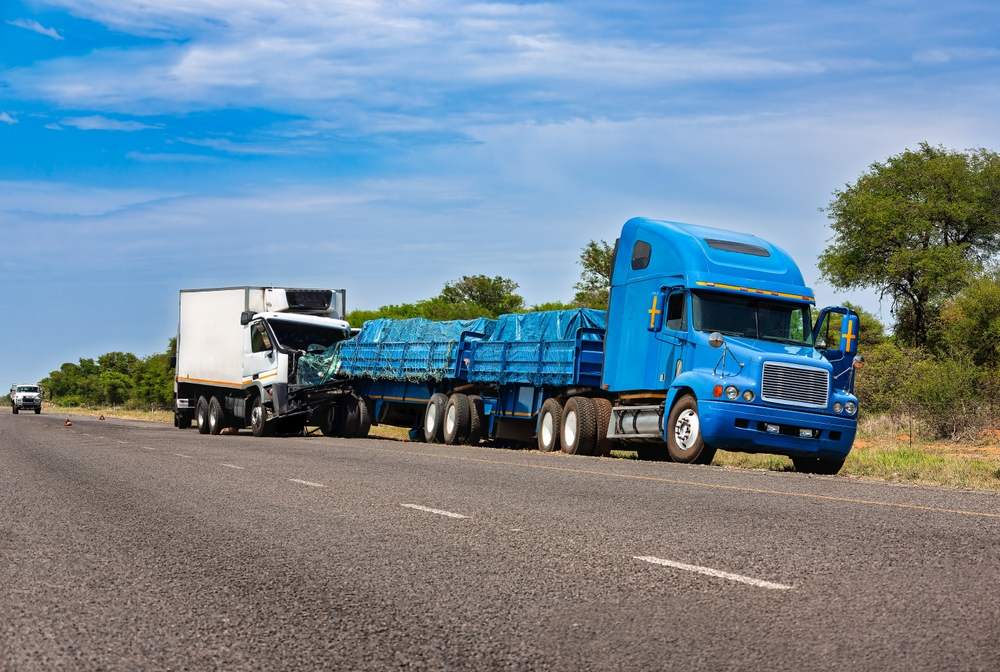
A commercial vehicle accident claim often involves more than just two drivers. When a business-owned vehicle causes a crash, the driver’s employer, the vehicle’s owner, and one or more insurance carriers may all share responsibility. That makes these cases far more involved than a typical collision between two passenger cars.
If you drive along Newberry Road through Tioga and toward the I-75 interchange, you share the road with a steady stream of delivery vans, contractor trucks, landscaping trailers, and utility vehicles every single day.
This growing mix of commercial traffic in west Gainesville creates real risk for everyday drivers, cyclists, and pedestrians. If you are hurt in a crash with one of these vehicles, you have the right to seek compensation for your medical bills and other losses.
That said, a commercial vehicle accident claim in this corridor is rarely straightforward. Business-owned vehicles carry different insurance requirements, employer liability questions, and federal or state regulations that do not apply to standard passenger cars.
Key Takeaways about Commercial Vehicle Accident Claims
- A commercial vehicle accident claim can involve the driver, the employer, the vehicle owner, and multiple insurance policies at the same time.
- Florida’s dangerous instrumentality doctrine may hold a vehicle’s owner liable even when someone else was behind the wheel.
- Delivery trucks, contractor vehicles, and landscaping trailers along Newberry Road and SR-26 are subject to different regulations than personal vehicles.
- Proving fault in a commercial vehicle crash often requires evidence from the company’s hiring records, maintenance logs, and driver training files.
- Multiple layers of insurance coverage can delay or complicate the claims process.
- Crashes near Tioga and the I-75 interchange frequently involve commercial fleets traveling between job sites and distribution hubs.
What Makes a Commercial Vehicle Accident Claim Different From a Regular Crash?
The primary difference is the number of potentially liable parties. In a standard two-car collision, you typically deal with the other driver and that person’s personal auto insurer. A commercial vehicle accident claim, in contrast, may pull in the driver, the company that owns the vehicle, a leasing company, a cargo loader, and sometimes a vehicle maintenance contractor, all at once.
Florida law applies what is known as the dangerous instrumentality doctrine, which holds vehicle owners financially responsible for harm caused by anyone they permit to operate their vehicle. When a company owns a fleet of delivery vans or contractor trucks, this doctrine can extend liability well beyond the individual driver who caused the crash.
The Federal Motor Carrier Safety Administration (FMCSA) also imposes hours-of-service limits, vehicle inspection requirements, and driver qualification standards on many commercial operators. A violation of any of these federal rules can serve as strong evidence in a commercial vehicle insurance claim because it may show the company knew about a safety risk and failed to act.
These layers of regulation and liability are what set a commercial vehicle accident claim apart from an ordinary fender-bender between two personal cars.
The Tioga and Newberry Road Corridor: Where Commercial and Residential Traffic Collide
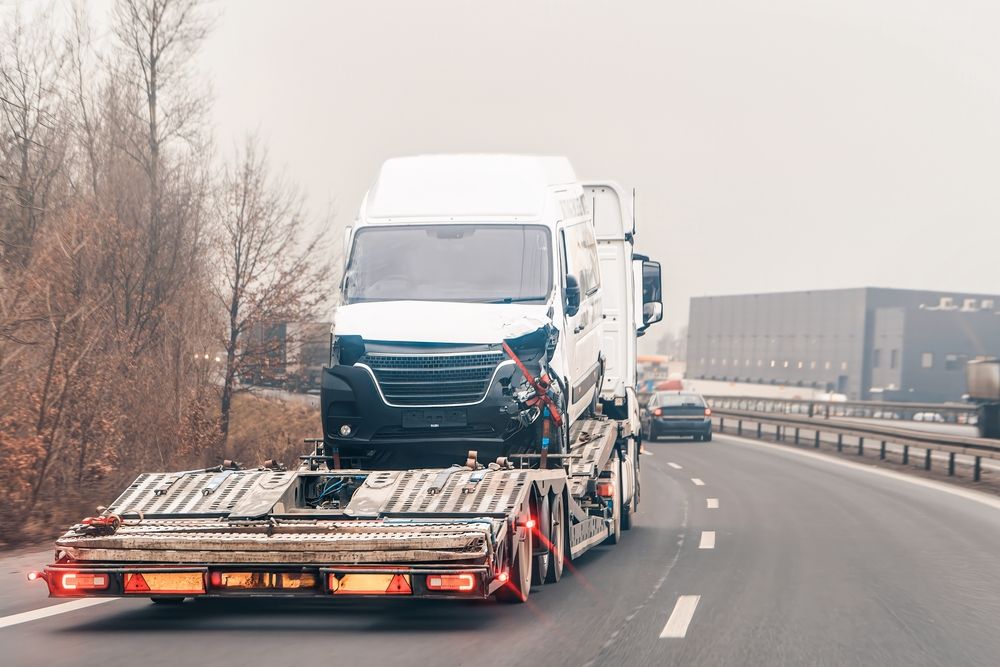
Newberry Road, also known as SR-26, is the main commercial artery running through west Gainesville. It connects residential neighborhoods like the Town of Tioga to the I-75 interchange and continues west toward Jonesville.
During morning and evening commutes, this stretch fills with a heavy mix of delivery vans hauling packages, landscaping crews towing equipment trailers, and contractor trucks heading to and from job sites.
What makes this corridor particularly risky is the constant merging of high-speed commercial traffic with local residential traffic. Families pulling out of Tioga’s neighborhood streets encounter box trucks and utility vehicles that often travel at a faster pace than surrounding cars.
Turning movements near shopping plazas and the approach to I-75 create conflict points where commercial vehicles and passenger cars frequently cross paths.
This stretch is not dominated by 18-wheelers alone. The commercial vehicles most often involved in crashes here include company-branded vans, pickup trucks pulling work trailers, refrigerated delivery vehicles, and fleet sedans driven by employees on the clock.
Each of these vehicles may carry a commercial auto policy with different terms than a standard personal policy, which directly affects your ability to recover full compensation through a commercial vehicle insurance claim.
How Do You Prove Fault in a Commercial Vehicle Crash?
Proving fault in a commercial vehicle crash requires looking beyond the moment of impact. While police reports and witness statements matter, the strongest evidence in these claims often comes from the company’s own internal records. That includes driver logs, hiring files, vehicle maintenance schedules, and GPS tracking data.
Consider a scenario where a delivery driver runs a red light near the Tioga intersection after working a 14-hour shift. The company’s scheduling records could reveal the employer allowed or even encouraged that driver to exceed safe working hours.
Or picture a landscaping trailer that comes unhitched along SR-26 because the company skipped routine inspections. In that case, maintenance logs become the proof of negligence.
Florida law requires commercial vehicle operators to maintain certain records under Florida Statute § 316.302, which adopts portions of the federal motor carrier safety regulations. These records are critical because companies and their insurers may attempt to destroy or withhold them if a claim is not filed promptly.
The key to proving fault in a commercial vehicle crash is acting quickly. An attorney can send a preservation letter demanding that the company retain all relevant evidence before anything disappears. In our experience handling these cases across Gainesville, early preservation demands have made the difference between a strong claim and one that falls apart due to missing records.
Multiple Insurance Policies Can Complicate Your Recovery
One of the most frustrating parts of filing a commercial vehicle insurance claim is figuring out which insurance policy actually applies. A single commercial vehicle crash can trigger coverage under several different policies at the same time:
- The driver’s personal auto insurance
- The company’s commercial auto policy
- A general liability policy covering the business
- An umbrella or excess policy that adds another layer of coverage
Each insurer has its own adjuster, its own defense attorney, and its own strategy for minimizing what it pays out. These adjusters often point fingers at one another, arguing that a different policy should cover the loss. The result is a drawn-out process that leaves injured people waiting for answers while insurance companies argue among themselves.
In Florida, commercial vehicles are generally required to carry higher minimum insurance limits than personal vehicles. The Florida Department of Highway Safety and Motor Vehicles sets baseline requirements, and the FMCSA adds additional mandates for interstate carriers. Higher policy limits can mean larger potential recoveries, but they also give insurers a stronger financial incentive to fight the claim aggressively.
Understanding which policies apply and how they stack is essential to recovering full compensation after a commercial vehicle crash along the Newberry Road corridor.
Why Does Company Vehicle Accident Liability Get So Complicated?
Company vehicle accident liability becomes complicated because Florida law allows injured people to hold employers responsible under multiple legal theories at the same time.
The dangerous instrumentality doctrine, respondeat superior (which means an employer can be held liable for employee actions performed on the job), and negligent hiring or supervision claims can all apply in a single case.
Specifically, if a contractor’s employee causes a crash while driving a company truck to a job site near Jonesville, the injured person may have claims against the driver personally, the contracting company as the vehicle’s owner, and the company again for failing to properly train or supervise its driver. Each of those theories requires different evidence and carries a different legal standard.
This complexity increases when the driver is classified as an independent contractor rather than a direct employee. Companies frequently make that argument to try to avoid liability. Determining the true employment relationship requires examining the level of control the company exercises over the driver’s schedule, route, and methods, not just what the contract says on paper.
A delivery truck accident claim along SR-26, for instance, might involve a driver working for a third-party logistics company that contracts with a national retailer. In that scenario, both the logistics company and the retailer could share liability.
We have seen these multi-party disputes play out repeatedly along Gainesville’s west-side corridors, and sorting out these relationships requires a legal team with experience handling complex commercial claims rather than a one-size-fits-all approach.
Filing a Delivery Truck Accident Claim Along the SR-26 Corridor
A delivery truck accident claim near Tioga or along SR-26 follows many of the same basic steps as any personal injury case, but with added layers that require careful attention.
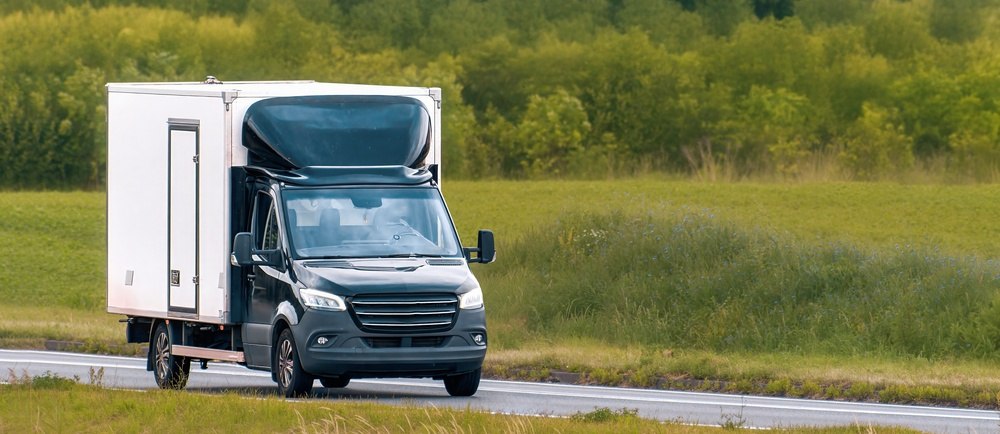
The volume of delivery traffic in this area, particularly from e-commerce fulfillment routes running between distribution centers and residential neighborhoods, means these crashes happen with increasing regularity.
When a delivery vehicle hits you, the driver’s employer often dispatches a rapid-response team to the scene or contacts the driver immediately. These teams work to protect the company’s interests, not yours. They may collect evidence, take statements, and begin building a defense before you have even left the emergency room.
Gainesville passenger-vehicle drivers caught up in commercial truck crashes are frequently at a disadvantage in the early hours and days after a collision. The company already has legal representation working on its side of the case. Leveling that playing field means getting your own legal team involved as soon as possible so evidence is preserved and your rights are protected from the start.
It is also worth noting that drivers in nearby Haile Plantation face similar SW-side traffic risks due to shared routes along the Newberry Road and Archer Road corridors. The commercial traffic patterns that affect Tioga extend across much of west Gainesville, making company vehicle accident liability a concern for residents throughout this part of town.
FAQs for Commercial Vehicle Accident Claim
Here are answers to some of the most common questions people have after being involved in a crash with a business-owned vehicle.
In most situations, yes. Florida’s respondeat superior doctrine holds employers liable for the negligent actions of employees acting within the scope of their job duties. If the driver was making deliveries, traveling to a work site, or performing any other work-related task at the time of the crash, the employer may be held responsible alongside the driver.
This situation is more common than many people realize, especially along the Newberry Road corridor where independent contractors and small business owners frequently use personal vehicles for work. Whether a commercial insurance policy applies depends on factors like whether the vehicle was being used for business purposes at the time and whether the owner carried a commercial endorsement on the policy.
Florida’s statute of limitations for most personal injury claims is generally two years from the date of the accident under Florida Statute § 95.11. However, acting sooner is strongly recommended because commercial companies may dispose of vehicle data, driver logs, and surveillance footage if they are not put on notice of a potential claim early on.
A driver can obey every traffic signal and still be found negligent. If the driver was fatigued from an excessively long shift, operating a poorly maintained vehicle, or distracted by a company-issued device, those factors can establish fault even without a traffic violation. The investigation often looks well beyond what happened at the intersection.
The most common commercial vehicles involved in collisions along this stretch of Newberry Road and SR-26 include delivery vans from major retailers, landscaping trucks with equipment trailers, contractor pickups, utility service vehicles, and fleet cars used by sales or service companies.
While 18-wheelers do use this corridor to reach the I-75 interchange, the majority of commercial crashes here involve smaller business-owned vehicles.
In many cases, yes. Commercial insurers often extend early settlement offers that sound reasonable but fall well short of covering long-term medical costs, lost income, and pain and suffering. These early offers are designed to close the file quickly and limit the company’s financial exposure, not to fully compensate you for your injuries.
Critical evidence includes the company’s driver qualification file, vehicle inspection and maintenance records, GPS and electronic logging device data, dispatch communications, and any dashcam or surveillance footage from the vehicle or nearby businesses.
A formal preservation demand sent to the company promptly after the crash helps prevent this evidence from being lost or destroyed.
Injured in a Commercial Vehicle Crash Near Tioga or Newberry Road? We Are Here to Help.

A commercial vehicle accident claim along the Newberry Road corridor demands more than a standard approach. When multiple parties, overlapping insurance policies, and employer liability questions are all in play, you need a legal team that understands how to build these cases from the ground up.
At Bagen Law Accident Injury Lawyers, we have spent more than 40 years fighting for injured people across Gainesville and North Central Florida. Our team has recovered hundreds of millions of dollars for clients, and we bring that same level of dedication to every commercial vehicle case we handle. We do not collect a fee unless we win your case.
If you or someone you love has been hurt in a crash involving a delivery truck, contractor vehicle, or any other commercial fleet vehicle near Tioga, Jonesville, or anywhere along SR-26, contact a Gainesville truck accident lawyer at (800) 800-2575 for a free case review. We are ready to listen to your story and fight for the compensation you deserve.